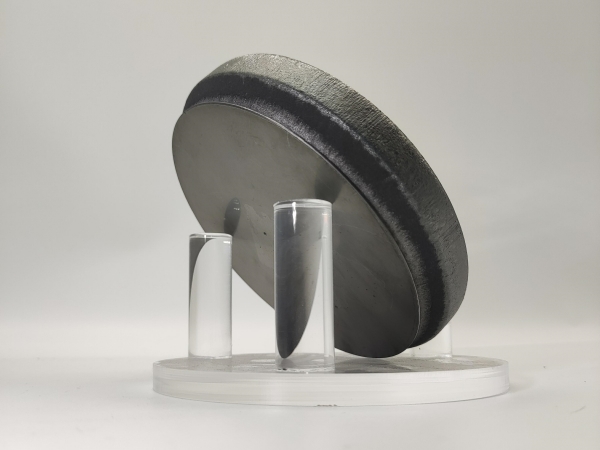
As a third-generation semiconductor material, silicon carbide (SiC) not only offers the advantages of a wide band gap but also exhibits excellent thermal conductivity. In electric vehicles, electronic components typically generate significant heat during operation. Without effective heat dissipation, this heat can negatively impact both the performance stability and service life of the vehicle. Thanks to its superior thermal conductivity, silicon carbide is well-suited to address these thermal management challenges.
Silicon carbide wafers are generally classified into two types: N-type (conductive) and semi-insulating (HPSI). These two types exhibit different thermal conductivities, as shown below:

1. Technical OverviewFeaturing superior comprehensive physical and chemical properties, ...
With the continuous upgrading of high-power continuous-wave lasers, pulsed lasers, and h...
Featuring an ultra-broad spectral transmission window covering the full band from deep u...