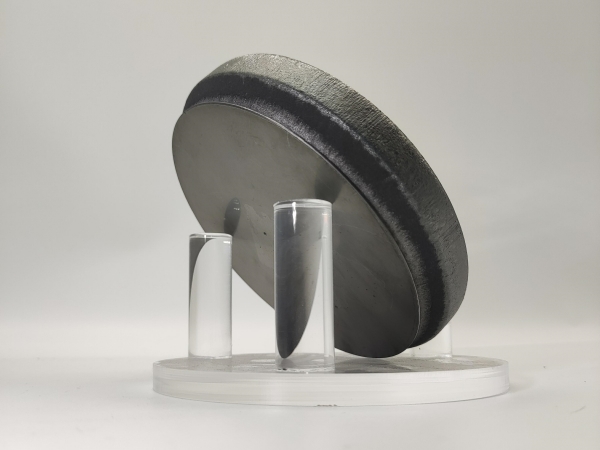
Single-crystal diamond substrates, formed by sp³-hybridized carbon atoms in a tetrahedral covalent bonding configuration, feature a long-range ordered crystal lattice free of grain boundaries. This unique structure enables exceptional performance across mechanical, thermal, optical, and electrical domains. Often referred to as the “ultimate semiconductor material,” single-crystal diamond surpasses the physical limits of conventional substrates through its ultra-high thermal conductivity and ultra-wide bandgap, securing an irreplaceable position in semiconductor thermal management, high-frequency devices, and advanced optical systems.
This article provides a systematic overview of the intrinsic material properties of single-crystal diamond substrates, mainstream manufacturing technologies, and key application pathways, with a focus on the semiconductor and optical markets, as well as recent industrial progress.

1. Core Material Properties of Single-Crystal Diamond Substrates
The superior performance of single-crystal diamond substrates originates from their highly ordered crystal structure. Their key properties are particularly well aligned with the stringent requirements of advanced semiconductor and optical applications.
1.1 Thermal Properties: Exceptional Heat Dissipation Capability
At room temperature, single-crystal diamond exhibits a thermal conductivity ranging from 1000 to 2310 W/(m·K). High-purity Type IIa diamond synthesized via chemical vapor deposition (CVD) can approach the theoretical limit of 2310 W/(m·K), exceeding copper (401 W/(m·K)) by more than five times and silicon carbide (490 W/(m·K)) by over four times. Its coefficient of thermal expansion is extremely low—only 0.8 × 10⁻⁶ /°C at room temperature—allowing it to maintain structural stability under extreme thermal cycling from –55°C to 250°C. These attributes effectively mitigate heat accumulation in high-power devices.
Single-crystal diamond also demonstrates outstanding thermal stability. In non-oxidizing environments, it can withstand extremely high temperatures, oxidizing only at 720–800°C in pure oxygen, while graphitization in air typically begins at 850–1000°C.
1.2 Electrical Properties: Ultra-Wide Bandgap and Tunability
With a bandgap of 5.47 eV and a breakdown electric field strength of up to 10 MV/cm, single-crystal diamond significantly outperforms silicon (1.12 eV) and silicon carbide (3.3 eV), enabling stable operation under high-temperature, high-frequency, and high-voltage conditions. Intrinsic single-crystal diamond is an electrical insulator; however, its electrical properties can be precisely engineered through doping.
Boron-doped Type IIb diamond exhibits semiconducting behavior, with carrier concentrations controllable up to 10¹⁹ cm⁻³ and resistivity below 0.1 Ω·cm. Co-doping with boron and nitrogen can even induce superconductivity, with a superconducting transition temperature of approximately 3 K, laying the groundwork for future quantum device applications. Additionally, diamond’s excellent dielectric properties help reduce parasitic capacitance and enhance high-frequency device performance.
1.3 Optical Properties: Ultra-Wide Spectral Transparency
Single-crystal diamond offers an exceptionally broad optical transmission window, spanning from 225 nm (ultraviolet) to 25 μm (infrared, excluding the 1.8–2.5 μm band). Its theoretical transmittance reaches 71.6%, with a refractive index of 2.417 at 589 nm and a dispersion value of 0.044, enabling efficient transmission of multi-wavelength laser signals.
Compared with polycrystalline diamond, single-crystal diamond eliminates grain boundary scattering, resulting in significantly lower optical losses, particularly at 1 μm laser wavelengths. It also features outstanding radiation resistance and optical stability, maintaining consistent performance in extreme environments.
1.4 Mechanical and Chemical Properties: High Stability for Processing and Applications
With a Mohs hardness of 10 and a microhardness of 7000–10,000 kg/mm², single-crystal diamond exhibits exceptional resistance to wear and scratching, making it suitable for precision machining and harsh operating conditions. Chemically, it is highly inert, resisting most non-oxidizing acids and reacting only with strong alkalis, oxygen-containing salts, and molten metals—well suited to complex semiconductor fabrication environments.
However, its inherent brittleness and tendency to cleave along crystallographic planes place stringent demands on processing precision and process control.
2. Mainstream Manufacturing Technologies and Technical Progress
Single-crystal diamond substrates are primarily synthesized using High-Pressure High-Temperature (HPHT) and Chemical Vapor Deposition (CVD) methods. Among these, CVD—particularly Microwave Plasma Chemical Vapor Deposition (MPCVD)—has become the dominant route for semiconductor- and optical-grade substrates. Each method has distinct advantages and limitations, and both continue to evolve.
2.1 High-Pressure High-Temperature (HPHT) Method
The HPHT method replicates the thermodynamic stability conditions of diamond formation by converting graphite into diamond using diamond seeds and rare-earth composite catalysts under extreme temperature and pressure. In China, cubic press systems are widely adopted.
This method is technologically mature and capable of producing high-purity, colorless D/E/F-grade diamonds with single-crystal weights of 3–10 carats at relatively low cost. In 2024, global HPHT diamond production capacity reached approximately 3,850 tons, with China accounting for 81.0%.
However, HPHT also has notable limitations, including long growth cycles (weeks to months), low growth efficiency, and a maximum crystal size of approximately 20 mm. Producing 4-inch or larger wafers is not feasible, and nitrogen impurity levels are difficult to reduce to semiconductor-grade standards. As a result, HPHT diamonds are mainly used in low-end thermal substrates and abrasives, with limited applicability in advanced semiconductor and optical fields.
2.2 Chemical Vapor Deposition (CVD) Method
The CVD process deposits diamond layers onto seed crystals via chemical reactions of gaseous carbon sources (e.g., high-purity methane) under low pressure. By repeatedly growing and stacking layers, thick diamond substrates suitable for wafer processing can be obtained. MPCVD is currently the most promising industrial-scale technology for semiconductor and optical applications.
Its advantages are threefold. First, purity is highly controllable, enabling the synthesis of Type IIa diamond with extremely low nitrogen content and a ^12C isotope concentration up to 99.987%, achieving thermal conductivity near the theoretical limit. Second, significant progress has been made in wafer size: 2-inch substrates have entered pilot-scale production in China, 3-inch wafers are under engineering validation, and research institutes have successfully fabricated 4-inch crack-free free-standing substrates with thickness uniformity of ±3 μm and dislocation densities below 1 × 10⁸ cm⁻². Third, CVD products are thick plate-shaped substrates, directly compatible with standard wafer processing.
Current technological breakthroughs focus on equipment and process optimization. For example, 15 kW MPCVD systems developed by domestic equipment manufacturers enable plasma coverage for substrates larger than 4 inches, achieving growth rates of 9–12 μm/h. AI-driven parameter optimization has significantly reduced manual intervention, while domestically produced MPCVD equipment costs only one-tenth of imported systems, raising localization rates to approximately 65%.
Nevertheless, challenges remain. Unit costs are approximately 3.2 times higher than HPHT, yield rates average around 52.7%, and controlling wafer bow in large-diameter substrates is difficult. For 4-inch wafers, bow must be controlled within 10 μm to meet bonding requirements.
2.3 Progress in Supporting Processes
Key advances have also been achieved in doping, epitaxy, and polishing technologies. Uniform large-area p-type diamond doping has been realized, and boron–nitrogen co-doping has enabled superconducting properties. A “nickel–iridium composite substrate plus plasma pretreatment” process has been developed to produce defect-free 4-inch epitaxial wafers with surface roughness below 0.2 nm.
In polishing, chemical mechanical polishing (CMP) can achieve atomic-scale flatness with Ra ≤ 0.5 nm, fully meeting the requirements of semiconductor bonding and high-precision optical device fabrication.
3. Semiconductor Market Applications and Industry Status
In the semiconductor sector, applications of single-crystal diamond substrates are concentrated in thermal management and high-frequency devices. Driven by downstream demand from 5G, new energy vehicles, and artificial intelligence, the market is expanding rapidly. Between 2025 and 2030, China’s diamond materials market for semiconductor applications is projected to achieve a compound annual growth rate (CAGR) of 34.7%, exceeding RMB 8.23 billion by 2030.
3.1 Thermal Management and Substrates for Power Devices
This is currently the most mature application area, accounting for 58% of semiconductor diamond material demand in 2025. As a heat sink material, single-crystal diamond significantly reduces device junction temperatures. In GaN HEMT devices operating at 3 W/mm, the integration of diamond heat spreaders reduces junction temperature by 42%, extends device lifetime by 3.6 times, and improves system energy efficiency by over 18%.
Diamond heat spreaders developed by leading manufacturers have demonstrated temperature reductions of up to 25°C in semiconductor lasers and extended IGBT module lifetimes by approximately 30%, with widespread adoption in new energy vehicle IGBT modules, photovoltaic inverters, and industrial power supplies.
As a substrate material, GaN-on-diamond RF devices achieve power densities up to three times those of conventional SiC-based devices, making them well suited for high-frequency power amplifiers in 5G base stations. Penetration in 5G infrastructure and satellite communications is expected to exceed 35% by 2030.
3.2 High-Frequency and Quantum Semiconductor Devices
Leveraging its ultra-wide bandgap and low parasitic capacitance, single-crystal diamond supports the development of millimeter-wave and terahertz devices, with strong potential in satellite communications and quantum computing. Nitrogen-vacancy (NV) center quantum sensors represent a cutting-edge application, requiring ^12C enrichment above 99.99%, NV coherence times (T₂) exceeding 1.5 ms, and magnetic field sensitivity reaching 1 pT/√Hz.
These sensors enable applications such as neural imaging and inertial navigation. Currently, only a limited number of suppliers can provide small-batch production, with demand expected to grow by over 40% in 2026.
Furthermore, diamond’s radiation resistance makes it suitable for space-grade semiconductor devices used in space probes and nuclear industry equipment. Preliminary validation of diamond-based radiation-hardened devices has already been conducted domestically.
4. Optical Market Applications and Industry Status
Thanks to its wide spectral transparency, high thermal conductivity, and exceptional stability, single-crystal diamond substrates have enabled differentiated applications in high-power lasers, aerospace optics, and precision optical systems, driving the miniaturization and power scaling of advanced optical equipment.
4.1 High-Power Laser Optical Components
In kilowatt-class laser cutting, welding, and additive manufacturing, traditional quartz and optical glass components struggle to withstand high power density thermal loads.
Single-crystal diamond substrates effectively dissipate heat, preventing thermal distortion while maintaining low optical losses.
Laser cutting heads fabricated from synthetic CVD single-crystal diamond have achieved weight reductions exceeding 90% compared to conventional designs, enabling stable cutting of 1.5 mm stainless steel using a 1 kW single-mode fiber laser. Their high refractive index reduces the number of lenses required, supporting compact system designs and driving growing demand in industrial and medical laser equipment.
4.2 Aerospace and Extreme-Environment Optical Devices
Spaceborne optical systems must maintain stable performance under extreme temperatures and intense radiation. Single-crystal diamond can be fabricated into infrared windows, lenses, and prisms covering ultraviolet to infrared detection ranges. Its radiation resistance and thermal stability mitigate environmental degradation, and it has already been deployed in small-batch applications for satellite infrared detection and deep-space remote sensing.
Research institutes have developed 4-inch free-standing diamond membranes with thicknesses below 100 μm and bow less than 10 μm, effectively addressing the lightweight and stability requirements of aerospace optical components.
4.3 Precision and Quantum Optical Devices
In quantum communication systems and high-end spectrometers, the low defect density and high optical uniformity of single-crystal diamond ensure high signal transmission accuracy. NV centers can serve not only in quantum sensing but also as quantum communication nodes, supporting reliable quantum key distribution systems.
Additionally, in advanced microscopes and lithography optics, diamond substrates enhance resolution and stability. Domestic enterprises are actively collaborating with research institutions to validate and adapt these solutions.
5. Industry Trends and Key Challenges
5.1 Development Trends
The industry is characterized by accelerated equipment localization, larger wafer sizes at lower cost, and diversified application scenarios. The market share of domestically produced MPCVD equipment is expected to reach 50% by 2027, while 6-inch substrates are projected to enter mass production by 2026. Compared with 2020, costs are expected to decline by approximately 40%, driving market penetration beyond 25%.
From a policy perspective, China’s 14th Five-Year Plan for New Materials identifies large-area CVD diamond as a key strategic focus. Three major industrial clusters—Yangtze River Delta, Pearl River Delta, and Beijing–Tianjin–Hebei—now account for over 60% of the nation’s high-end R&D resources. Application development is expanding toward 8-inch substrates and diamond-based heterogeneous integration in semiconductors, as well as higher-power lasers and broader spectral detection in optics, with emerging demand from quantum technologies.
5.2 Key Challenges
Technically, large-area single-crystal growth remains a bottleneck. Mass production is still dominated by 2-inch substrates, while yields for 4-inch and larger wafers remain relatively low, with defect densities lagging behind international benchmarks. From a cost perspective, semiconductor-grade single-crystal diamond remains expensive, limiting large-scale adoption.
Across the supply chain, reliance on imported ultra-high-purity gases and advanced polishing materials persists, and industry standards are still evolving. Accelerating the implementation of standards such as “Technical Specifications for Electronic-Grade Diamond Substrates” will be essential to strengthening upstream–downstream collaboration.

6. Conclusion
With its unparalleled thermal, electrical, and optical properties, single-crystal diamond substrates offer irreplaceable advantages in semiconductor thermal management, high-frequency devices, and advanced optical systems, positioning them as a cornerstone material for next-generation high-end manufacturing. As MPCVD equipment localization accelerates, large-area fabrication technologies mature, and costs continue to decline, market penetration in applications such as 5G infrastructure, new energy vehicles, high-power lasers, and aerospace optics will continue to rise.
Future progress will depend on breakthroughs in large-area, low-defect crystal growth, optimized doping processes, and coordinated supply chain development. These advances will enable the transition of
single-crystal diamond substrates from laboratory-scale innovation to large-scale industrial production, empowering high-quality growth across the semiconductor and optical industries.