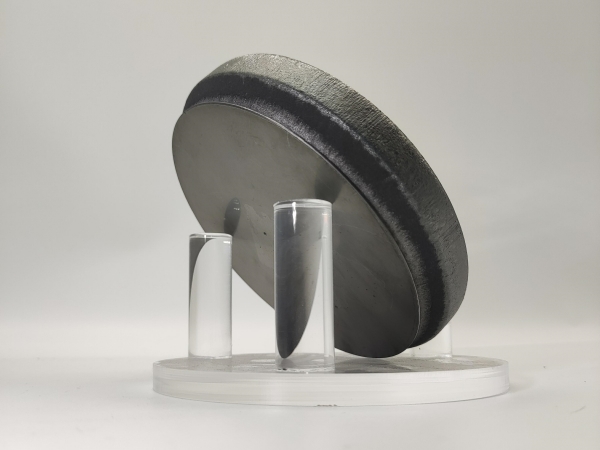
Single crystal diamond substrates are widely recognized as one of the most advanced materials for next-generation semiconductor and optical applications. Thanks to their sp³-hybridized carbon atomic structure and long-range ordered crystal lattice without grain boundaries, single crystal diamond exhibits exceptional thermal, electrical, optical, and mechanical properties that far exceed those of conventional substrate materials.
Often referred to as the “ultimate semiconductor material,” single crystal diamond enables breakthroughs in thermal management, high-frequency electronics, and high-power optical systems. This article provides an overview of the key material properties, mainstream manufacturing technologies, and major application markets of single crystal diamond substrates, with a focus on the semiconductor and optical industries.

1. Key Material Properties of Single Crystal Diamond Substrates
The superior performance of single crystal diamond substrates is fundamentally determined by their highly ordered crystal structure. These properties make them ideally suited for high-end semiconductor devices and advanced optical systems.
lUltra-High Thermal Conductivity for Advanced Heat Management
Single crystal diamond offers the highest known thermal conductivity of any bulk material. At room temperature, thermal conductivity ranges from 1,000 to 2,310 W/(m·K). High-purity CVD-grown Type IIa diamond can approach the theoretical limit of 2,310 W/(m·K), which is more than five times higher than copper and over four times higher than silicon carbide.
In addition, single crystal diamond has an extremely low coefficient of thermal expansion (approximately 0.8 × 10⁻⁶/°C at room temperature), ensuring excellent dimensional stability under wide temperature cycling. These properties make diamond substrates highly effective for reducing junction temperature and improving reliability in high-power semiconductor devices.
lUltra-Wide Bandgap and Excellent Electrical Performance
With a bandgap of 5.47 eV and a breakdown electric field strength of up to 10 MV/cm, single crystal diamond significantly outperforms traditional semiconductor materials such as silicon and silicon carbide. This allows stable operation under high voltage, high frequency, and high temperature conditions.
While intrinsic diamond is electrically insulating, controlled doping enables tunable electrical properties. Boron-doped diamond exhibits p-type semiconductor behavior, while advanced co-doping techniques have demonstrated superconducting properties at cryogenic temperatures. These characteristics open new possibilities for power electronics, RF devices, and emerging quantum technologies.
lWide Optical Transparency from UV to Infrared
Single crystal diamond substrates feature an ultra-broad optical transmission window, covering wavelengths from approximately 225 nm (ultraviolet) to 25 μm (infrared), excluding a narrow absorption band between 1.8 and 2.5 μm. With high optical transmittance, low scattering loss, and excellent radiation resistance, diamond is well suited for high-power laser optics and extreme-environment optical components.
Compared to polycrystalline diamond, single crystal diamond eliminates grain boundary scattering, making it particularly advantageous for low-loss laser and precision optical systems.
lExceptional Mechanical Strength and Chemical Stability
Diamond is the hardest known natural material, with a Mohs hardness of 10 and extremely high wear resistance. Single crystal diamond substrates can withstand precision machining and harsh operating environments. Chemically, diamond is highly inert and compatible with complex semiconductor fabrication processes.
However, due to its brittleness and cleavage planes, diamond processing requires advanced manufacturing and polishing techniques to achieve high yield and surface quality.
2. Manufacturing Technologies for Single Crystal Diamond Substrates
Single crystal diamond substrates are primarily produced using two technologies: High Pressure High Temperature (HPHT) and Chemical Vapor Deposition (CVD). Among them, CVD—especially Microwave Plasma CVD (MPCVD)—has become the dominant technology for semiconductor-grade and optical-grade diamond substrates.
lHPHT Diamond Growth Technology
The HPHT method synthesizes diamond under extreme temperature and pressure conditions using graphite as the carbon source and metal catalysts to promote crystal growth. This mature technology enables the production of relatively low-cost diamond crystals with good purity and color.
However, HPHT-grown diamond is limited in crystal size and impurity control, making it difficult to meet the stringent requirements of advanced semiconductor and optical applications. As a result, HPHT diamonds are mainly used in thermal management components and industrial applications rather than high-end electronic devices.
CVD diamond growth involves depositing diamond layers from hydrocarbon gases onto diamond seed crystals under low-pressure plasma conditions. MPCVD technology, in particular, enables precise control over purity, thickness, and crystal quality.
CVD technology allows the production of ultra-high-purity Type IIa diamond with extremely low nitrogen content and high isotopic purity. It also enables larger substrate sizes, with 2-inch wafers already in pilot production and ongoing development toward 4-inch and larger wafers. CVD-grown diamond substrates are typically produced as thick plates, making them suitable for direct wafer processing.
Continuous improvements in MPCVD equipment, plasma uniformity, and process automation are driving cost reduction and yield improvement, accelerating the industrialization of large-area single crystal diamond substrates.
3. Semiconductor Applications of Single Crystal Diamond Substrates
The semiconductor market is currently the largest and fastest-growing application area for single crystal diamond substrates, driven by demand for high power density, high frequency, and high reliability devices.
lPower Device Thermal Management and Diamond Heat Spreaders
One of the most mature applications of single crystal diamond is thermal management for power devices. Diamond heat spreaders significantly reduce junction temperature in GaN, SiC, and laser devices, improving performance, energy efficiency, and lifetime.
In GaN-on-diamond RF devices, power density can be several times higher than that of conventional SiC-based devices, making them ideal for 5G base stations, satellite communications, and radar systems.
lHigh-Frequency and Quantum Semiconductor Devices
Thanks to its ultra-wide bandgap and low dielectric loss, single crystal diamond is a promising substrate for millimeter-wave and terahertz devices. In addition, diamond-based nitrogen-vacancy (NV) centers are a key material platform for quantum sensing, quantum communication, and quantum computing applications.
Diamond’s radiation resistance also makes it suitable for space-grade and nuclear electronics, where long-term reliability under extreme conditions is critical.
4. Optical Applications of Single Crystal Diamond Substrates
In the optical market, single crystal diamond substrates are increasingly used in high-power, high-precision, and extreme-environment optical systems.
lHigh-Power Laser Optics
Single crystal diamond is ideal for high-power laser windows, lenses, and heat spreaders due to its exceptional thermal conductivity and low optical absorption. In industrial laser cutting, welding, and additive manufacturing systems, diamond optics help prevent thermal distortion and enable compact, lightweight optical designs.
lAerospace and Extreme-Environment Optical Components
Diamond optical components are used in infrared windows, lenses, and prisms for aerospace, satellite, and remote sensing systems. Their excellent thermal stability and radiation resistance ensure reliable optical performance in space and other harsh environments.
lPrecision and Quantum Optics
In precision optical instruments and quantum photonic devices, the low defect density and high optical uniformity of single crystal diamond substrates enable high signal fidelity. Diamond-based quantum optical components are emerging as key building blocks for next-generation photonic and quantum systems.
5. Industry Trends and Challenges
The single crystal diamond substrate industry is moving toward larger wafer sizes, lower manufacturing costs, and broader application scenarios. Localization of MPCVD equipment, improved process automation, and advances in polishing and epitaxy are accelerating commercialization.
Key challenges remain, including the high cost of semiconductor-grade diamond, yield control for large-area wafers, and dependence on imported high-purity materials. Continued innovation across the supply chain and the establishment of unified technical standards will be essential for large-scale adoption.

6. Conclusion
Single crystal diamond substrates offer unmatched thermal, electrical, and optical performance, making them a critical enabling material for advanced semiconductor and optical technologies. As CVD and MPCVD manufacturing continues to mature and costs decline, diamond substrates are expected to play an increasingly important role in 5G communications, power electronics, high-power lasers, aerospace optics, and quantum technologies.
With ongoing breakthroughs in large-area growth, doping control, and industrial collaboration, single crystal diamond substrates are transitioning from niche laboratory materials to scalable, high-value solutions for the global semiconductor and photonics industries.