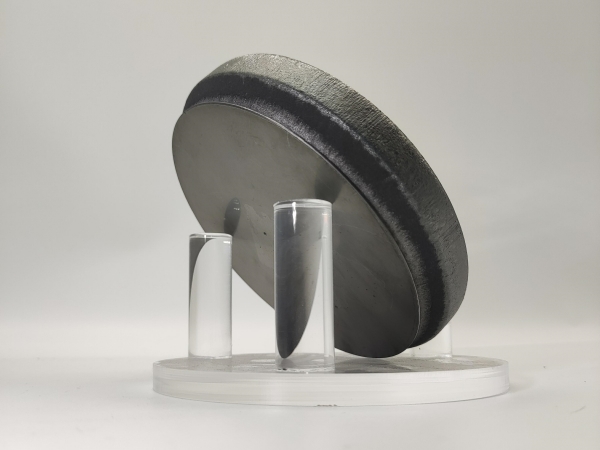
The hardness of crystalline materials is a core parameter that determines the selection of cutting, grinding, and polishing processes, directly influencing machining efficiency, cost control, and final product quality. Material hardness affects key aspects such as tool selection, process parameters, tool wear rate, and defect control difficulty.
This article systematically analyzes four representative materials—sapphire, silicon carbide (SiC), silicon wafers, and quartz—from the perspective of hardness characteristics, highlighting their differentiated impacts on cutting, grinding, and polishing processes and corresponding process adaptation strategies.

1. Core Hardness Characteristics of the Four Materials
| Material |
Mohs Hardness |
Vickers Hardness
(HV) |
Key Hardness Characteristics |
Supplementary Properties
(Impact on Processing) |
| Sapphire (Single-Crystal Al₂O₃) |
9.0 |
2000–2300 |
Extremely high hardness, second only to diamond; moderate brittleness, low fracture toughness |
Excellent chemical stability, corrosion resistance, and hardness retention at high temperatures |
| Silicon Carbide (Single-Crystal SiC) |
9.5 |
2400–2800 |
Near-diamond hardness; very brittle; fracture toughness slightly higher than sapphire |
High mechanical strength, excellent high-temperature performance, strong thermal shock resistance; prone to stress-induced cracks |
| Silicon Wafer (Single-Crystal Si) |
6.5–7.0 |
1100–1300 |
Medium hardness; coexistence of brittleness and plasticity; strong anisotropy |
Good machinability, excellent CMP compatibility, surface easily oxidized |
| Quartz (Amorphous SiO₂) |
7.0 |
800–1000 |
Medium-to-low hardness; high brittleness; less uniform hardness than single crystals |
Extremely low thermal expansion, strong thermal shock resistance, chemically resistant except to hydrofluoric acid |
Note: Mohs hardness reflects relative scratch resistance, while Vickers hardness more accurately represents resistance to plastic deformation. Together, they determine tool wear rate and machining stress during processing.
2. Differentiated Impact of Hardness on Cutting, Grinding, and Polishing Processes
(1) Sapphire: “Specialized Tools + Low-Stress Processing” Driven by High Hardness
1. Impact on Cutting and Process Adaptation
The extremely high hardness of sapphire causes rapid wear of conventional cutting tools, and standard cutting methods often lead to edge chipping and cracks. Process adaptation requires high-hardness dedicated tools and low-stress cutting modes.
Electroplated diamond wire saws are preferred for slicing (wire diameter 0.12–0.18 mm, diamond grit size 3–5 μm), combined with low speed and low feed rates (wire speed 10–15 m/s, feed rate 0.05–0.1 mm/min). Specialized coolants containing polyethylene glycol and SiC micro-powder are used to reduce cutting temperature and stress, controlling edge chipping to ≤50 μm.
Laser cutting is generally not recommended due to the formation of thick damaged layers; femtosecond laser cutting may be used only for complex geometries, followed by grinding to remove the modified layer.
2. Impact on Grinding and Process Adaptation
The main challenge in grinding is rapid removal of the cutting damage layer while controlling tool wear. A multi-stage diamond grinding process is required:
Rough grinding: 15–20 μm diamond abrasive, cast-iron plate, pressure 0.1–0.2 MPa
Intermediate grinding: 5–8 μm diamond abrasive, softer alloy plate to reduce stress
Fine grinding: 1–3 μm abrasive, pressure <0.05 MPa to avoid subsurface cracks
Adequate cooling is essential throughout, with slurry circulation ≥5 L/min to prevent thermal-induced brittle fracture.
3. Impact on Polishing and Process Adaptation
Due to high hardness, conventional polishing struggles to achieve nanometer-level flatness. Chemical mechanical polishing (CMP) is adopted using diamond colloidal slurry (0.1–0.5 μm) and polyurethane pads, with polishing pressure 0.03–0.08 MPa and rotation speed 30–50 rpm.
Chemical reactions form a removable oxide layer, while mechanical action removes it synergistically, achieving surface roughness
Ra ≤0.2 nm with no subsurface damage.
(2) Silicon Carbide: Ultra-High Hardness and Brittleness — A “High-Precision, Low-Damage” Challenge
1. Impact on Cutting and Process Adaptation
SiC is harder and more brittle than sapphire, making crack suppression the core challenge. High-performance diamond wire saws are required (wire diameter 0.1–0.15 mm, grit size 2–4 μm), using a “high speed, low feed” strategy (15–20 m/s wire speed, 0.03–0.08 mm/min feed).
High-viscosity coolants containing antioxidants and stress dispersants maintain cutting temperature below 50 °C, controlling edge chipping within 30 μm. For wafers ≥6 inches, dual-wire synchronous cutting is recommended to improve flatness and prevent warpage.
2. Impact on Grinding and Process Adaptation
Grinding requires strict control of pressure and removal rate.
Rough grinding: 20–30 μm diamond abrasive, rigid plate, 0.08–0.15 MPa
Fine grinding: Gradual reduction (8 μm → 3 μm → 1 μm), with defect inspection after each stage
Since SiC is chemically inert, grinding slurries require no chemical additives; uniform abrasive dispersion and plate flatness ≤0.01 mm are critical.
3. Impact on Polishing and Process Adaptation
Ultra-high hardness results in very low polishing efficiency and high scratch risk. A
two-step polishing approach is applied:
Diamond mechanical polishing: 0.1 μm diamond slurry, 0.05 MPa pressure
Plasma-assisted polishing (PAP): Atomic-level plasma etching to correct micro-topography
This approach achieves
Ra ≤0.1 nm, subsurface damage ≤50 nm, improves efficiency by over 30%, and reduces tool wear compared to conventional CMP.
(3) Silicon Wafers: “High Efficiency + Low Cost” under Medium Hardness
1. Impact on Cutting and Process Adaptation
Silicon wafers have good machinability and do not require specialized tools. Diamond wire sawing is suitable for large-diameter wafers (≥8 inches) using wire diameters of 0.18–0.25 mm and grit sizes of 5–8 μm. Typical parameters include wire speeds of 8–12 m/s and feed rates of 0.15–0.3 mm/min, with standard emulsified coolant.
Inner-diameter saw cutting is suitable for smaller wafers, offering higher precision but lower throughput. Due to anisotropy, cutting direction should align with <111> or <100> crystal orientations to ensure surface uniformity.
2. Impact on Grinding and Process Adaptation
Grinding is straightforward and cost-effective:
Rough grinding: 10–20 μm SiC abrasive, resin plate, 0.2–0.3 MPa
Fine grinding: 3–5 μm Al₂O₃ abrasive, soft plate, ~0.1 MPa
Silicon’s relatively good plasticity reduces brittle fracture risk, and cooling requirements are modest (slurry flow ≥3 L/min), making it suitable for mass production.
3. Impact on Polishing and Process Adaptation
Silicon wafers benefit from highly mature CMP technology, offering the lowest polishing cost and highest efficiency among the four materials. Silica slurry (0.05–0.1 μm) and foam polyurethane pads are used at 0.1–0.15 MPa and 50–60 rpm.
Chemical reactions form a SiO₂ layer that is rapidly removed mechanically, achieving
Ra ≤0.1 nm with polishing times ≤30 minutes per wafer. Post-polish cleaning is essential to remove slurry residues and prevent oxidation.
(4) Quartz: “Precision-First” Processing with Medium-Low Hardness and High Brittleness
1. Impact on Cutting and Process Adaptation
Although quartz is slightly softer than silicon, its brittleness is extremely high. Diamond wire sawing or laser cutting may be used.
Wire sawing employs wire diameters of 0.15–0.2 mm, grit sizes of 4–6 μm, wire speeds of 10–14 m/s, and feed rates of 0.08–0.15 mm/min, with high-flow coolant to minimize stress accumulation.
CO₂ laser cutting (10.6 μm wavelength) is suitable for complex shapes but produces a modified layer (~1–2 μm) that must be removed by subsequent grinding. Real-time cutting force monitoring is critical due to hardness non-uniformity.
2. Impact on Grinding and Process Adaptation
Grinding prioritizes precision and crack suppression.
Rough grinding: 15–20 μm Al₂O₃ abrasive, resin plate, 0.08–0.12 MPa
Fine grinding: 3–5 μm CeO₂ abrasive, felt pad, pressure <0.05 MPa
Neutral coolants are required to avoid chemical reactions, and grinding rates must be controlled to prevent thermal degradation.
3. Impact on Polishing and Process Adaptation
Optical polishing is adopted to balance transparency and flatness. CeO₂ colloidal slurry (0.05–0.1 μm) with pitch polishing pads is used at 0.03–0.06 MPa and 30–40 rpm.
By optimizing slurry pH (neutral to weakly acidic), surface roughness
Ra ≤0.05 nm, optical transmittance ≥90% (UV–IR), and defect-free surfaces can be achieved.
3. Comparative Summary of Processing Impacts
| Aspect |
Sapphire |
Silicon Carbide |
Silicon |
Quartz |
| Tool Requirements |
High-hardness diamond tools, fast wear |
Ultra-high-performance diamond tools, severe wear |
Standard diamond/Al₂O₃ tools, minimal wear |
Soft abrasives to avoid hard damage |
| Processing Efficiency |
Low |
Very low |
High |
Medium |
| Main Defect Risks |
Edge chipping, subsurface cracks |
Stress cracks, surface scratches |
Orientation deviation, surface oxidation |
Edge chipping, laser-induced damage |
| Processing Cost |
Medium–High |
Extremely high |
Low |
Medium |
| Optimal Process Mode |
Specialized equipment + low stress + CMP |
High-precision tools + plasma-assisted polishing |
Standard equipment + mass-production CMP |
Optical equipment + soft polishing |
4. Conclusion
The hardness characteristics of sapphire, silicon carbide,
silicon wafers, and quartz fundamentally determine their cutting, grinding, and polishing process routes and core challenges.
Materials with higher hardness (such as SiC and sapphire) impose stringent requirements on tool performance and low-stress, high-precision processes, resulting in lower efficiency and higher cost, with crack and scratch control as the primary concerns.
Materials with medium or lower hardness (such as silicon and quartz) benefit from more mature processes, higher efficiency, and lower cost, where key defect control focuses on crystal orientation, edge chipping, and surface damage layers.
In practical manufacturing, optimal processing must be achieved by comprehensively considering material hardness, target precision, production scale, and cost constraints, while systematically optimizing tool selection, process parameters, and cooling strategies to balance quality and efficiency.